 New
Custom Machining
Custom CNC Machining Service
Send a drawing or a sample — get a manufacturability review and a firm quote.
View MACHININGDongguan Hairuixing Technology Co., Ltd.
Swiss-type turning exists for one problem: long, thin parts that bend when you cut them. A sliding headstock feeds the bar through a guide bushing, so the cutting tool always works within a millimetre of the support point. The result is parts with a length-to-diameter ratio of 10:1 or more held to ±0.005 mm — the geometry behind bone screws, connector pins and instrument shafts.
| Machines | Swiss-type sliding headstock lathes with guide bushing |
|---|---|
| Diameter range | Ø 1 – 32 mm |
| Max. length | 300 mm (longer on request) |
| Length-to-diameter ratio | up to 20:1 with support |
| Standard tolerance | ±0.005 mm on diameters |
| Surface finish | Ra 0.4 µm standard, Ra 0.2 µm achievable |
| Materials | Stainless 316L / 17-4PH, titanium, brass, PEEK |
| Lead time | 10–20 working days |
On a conventional lathe a long shaft is held at one end and cut at the other, so it deflects and tapers. On a Swiss machine the bar is supported by a guide bushing right next to the tool, so deflection essentially disappears.
Turning, cross drilling, milling flats, thread rolling and cut-off all happen in one cycle with the sub-spindle picking off the finished part. No queue between operations, no handling damage on delicate features.
Cross holes below Ø 0.5 mm, wall thicknesses under 0.3 mm and fine threads on small diameters are routine here because the workpiece is supported throughout. On a conventional lathe these features are where the scrap comes from.
We run 316L, 17-4PH, Ti-6Al-4V and PEEK with material certificates to EN 10204 3.1. Small parts are easy to mix up, so each batch is laser-marked or bagged separately with its lot code.
On a conventional lathe the bar is gripped at one end only, so a slender part deflects away from the tool. A Swiss machine feeds the bar through a guide bushing that sits next to the tool, supporting the workpiece at the point of cut. That is what makes 10:1 length-to-diameter parts with real tolerances possible.
Down to Ø 1 mm with ±0.005 mm held on diameters. Below that, discuss the feature with us first — at some point the limiting factor is measurement uncertainty rather than the machine.
A drawing or 3D model is strongly preferred, because tolerances cannot be reverse-engineered reliably from a sample. If you only have a sample we can measure it and produce a drawing for your approval before cutting metal.
Yes. 316L, 17-4PH and Ti-6Al-4V are supplied with EN 10204 3.1 certificates as standard. Tell us the requirement on the enquiry so the correct certificate is ordered with the raw material, not after machining.
New
Send a drawing or a sample — get a manufacturability review and a firm quote.
View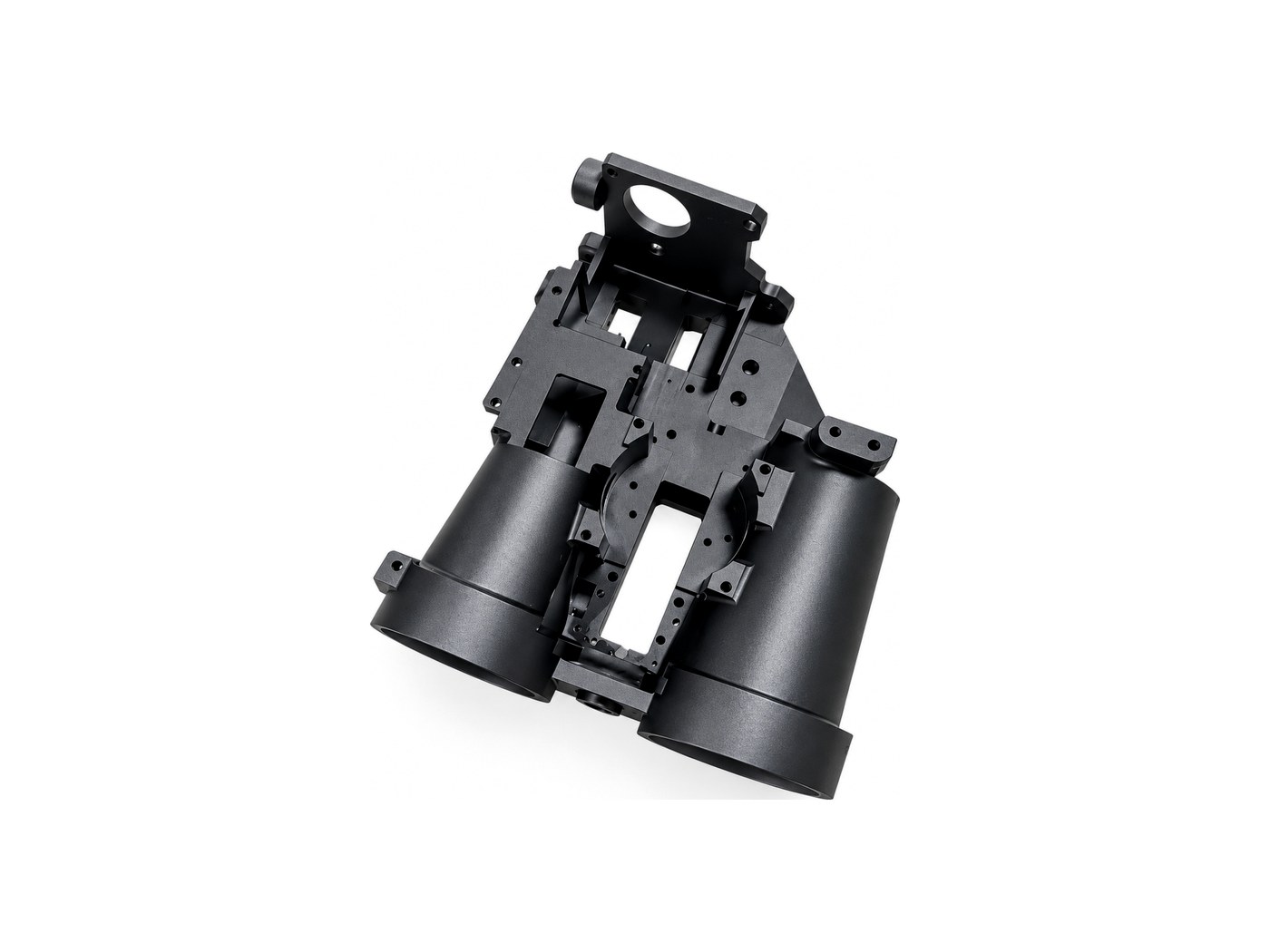
Thin-wall tubes, binocular bodies, baffle cones and eyepiece holders — machined to one datum.
View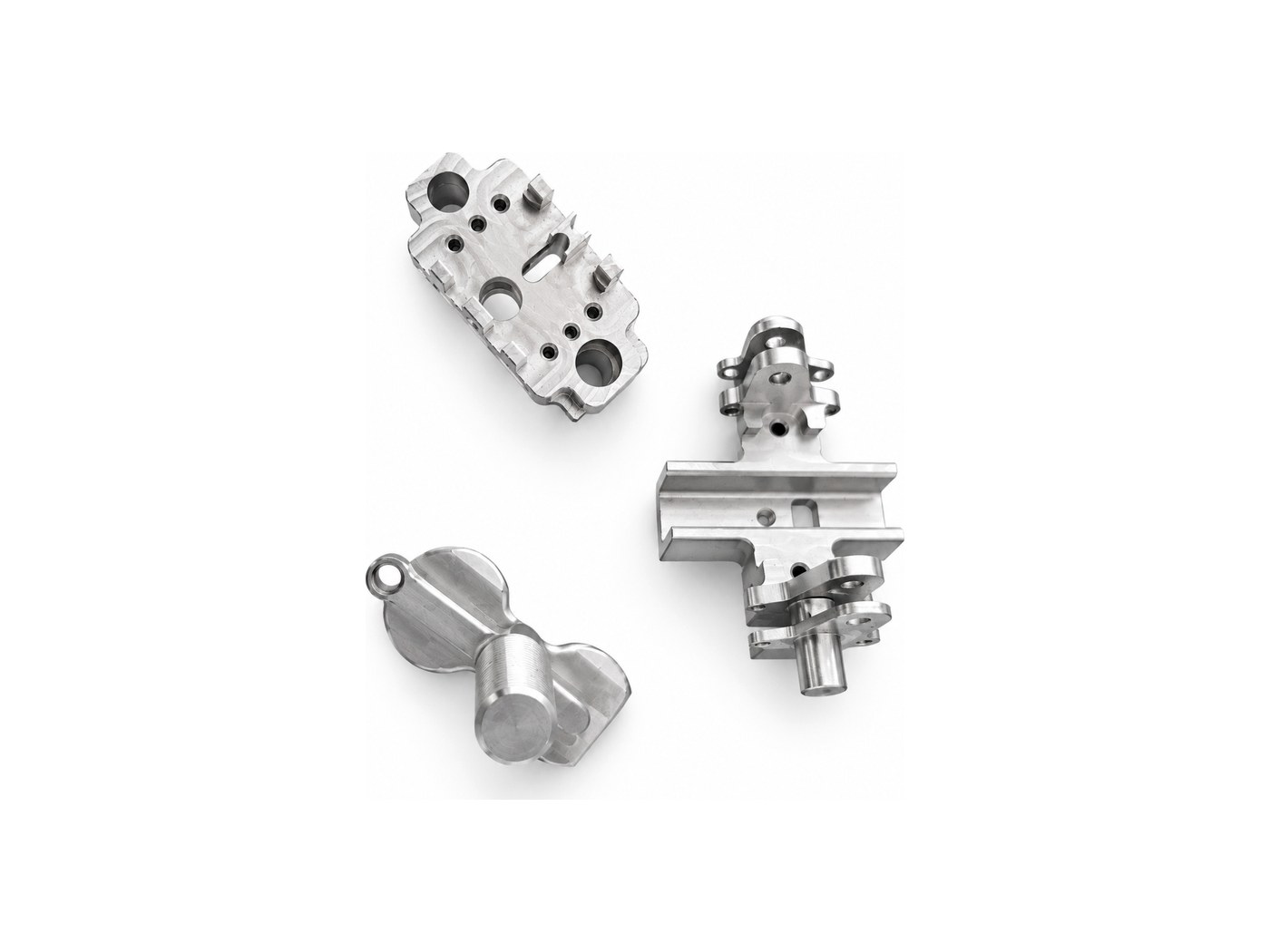
Instrument bodies, bone plates, drill guides and implant trial components.
ViewSend your drawing and receive a manufacturability review plus firm pricing within 24 hours.